businessnews.ie

Justin Moran
CEO, Power Capital
Ireland’s renewable energy sector has made remarkable progress over the last decade. Alongside corporate PPAs and battery storage, Ireland’s largest energy users can secure cost certainty, reduce emissions and support economic growth.
Solar, wind and energy storage are moving from emerging technologies to critical infrastructure, helping to strengthen energy security, support climate ambitions and create new opportunities for businesses across the country.
Yet, for Ireland’s largest energy users, the conversation has moved beyond sustainability alone. Energy is now a commercial risk, a competitiveness issue and a boardroom priority. Businesses are asking whether they can secure the electricity they need, whether they can manage long-term cost exposure and whether their energy strategy will support growth rather than constrain it.
Growth alongside renewable energy certainty
For data centres, advanced manufacturers, life sciences facilities, food producers and other energy-intensive industries, access to reliable and competitively priced electricity is increasingly central to investment decisions. These organisations operate in an environment shaped by rising demand, volatile wholesale markets, more stringent reporting obligations and pressure to reduce emissions (and growing scrutiny of Scope 2 emissions in particular) without compromising performance.
The challenge is no longer how Ireland builds more renewable generation; it is how businesses lock in energy certainty in a way that protects margins, supports expansion and reduces carbon exposure. Delivering economic growth, energy security and sustainability together will take more than new capacity; it demands sustained investment in the grid reinforcement, storage and flexible systems that turn generation into reliable supply. That is where the opportunity becomes commercially significant.
Energy procurement is becoming a strategic discipline
The organisations that treat energy as a long-term business asset rather than a short-term operating cost will be better positioned to manage volatility , meet customer and investor expectations and plan future growth with confidence.
Corporate Power Purchase Agreements (PPAs), dedicated renewable generation, battery storage and integrated energy solutions are becoming practical tools for businesses that need greater control over their energy future.
A corporate PPA, for example, can fix a large user’s power price for 10 to 15 years, converting a volatile operating cost into a predictable, budgetable one. These models can help large energy users improve budget certainty, reduce exposure to market volatility, demonstrate credible decarbonisation progress and support the development of new renewable infrastructure.
Powering long-term competitiveness
At Power Capital Renewable Energy, we see first-hand how business energy requirements are evolving. Large energy users are increasingly looking for partners who understand demand profiles, commercial risk, grid constraints, sustainability commitments and the need for solutions that are bankable, deliverable and aligned with long-term operating plans.
Caolan Duffy, Chief Commercial Officer, says: “Having partnered with corporate offtakers to deliver over 230MW of new renewable capacity to date, Power Capital is actively supporting organisations to meet their energy requirements in a competitive, long-term fashion whilst decarbonising Ireland’s energy system.”
organisations that treat energy as a long-term business asset
rather than a short-term operating cost will be better positioned to manage volatility
National renewable energy opportunity
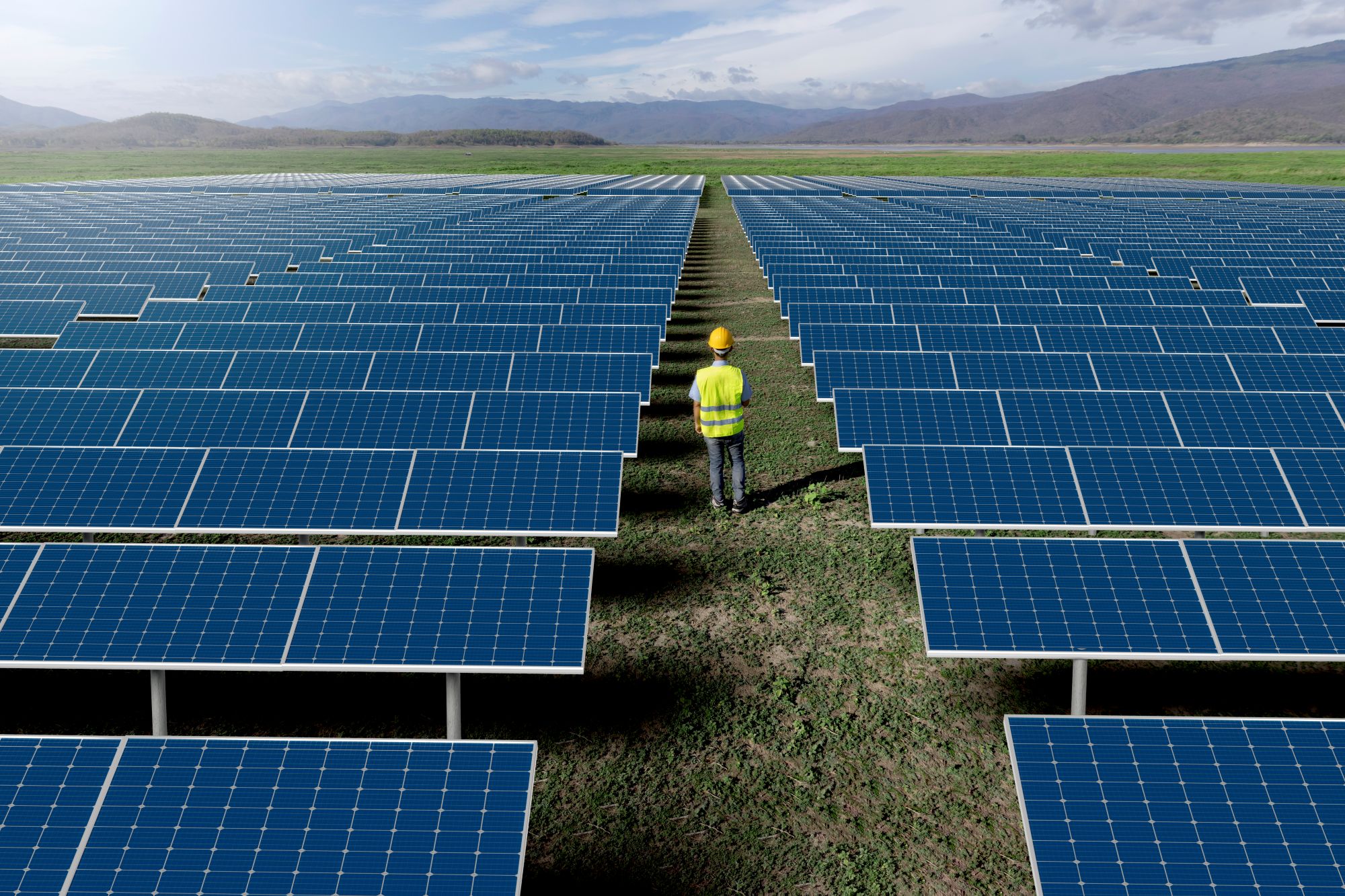
With strong renewable resources, a growing solar sector, increasing battery storage deployment and a national ambition to attract high-value investment, Ireland can position energy infrastructure as a competitive advantage.
However, that advantage will only be realised if renewable generation is connected to the real needs of businesses that require scale, reliability and certainty. Realising it will require the enabling reforms only Government can deliver — faster grid connections and a more predictable planning and permitting regime — so that consented projects can reach large users at the pace the economy needs.
For large energy users, the real question is no longer whether renewable energy should form part of their strategy, but how quickly they can move from ambition to action.
The future of energy is no longer just about generation. It is about commercial certainty, resilience and giving Ireland’s largest energy users the confidence to power their next phase of growth.