businessnews.ie


Derek Russell
Director of Innovation, New Product Development and Sustainability, Techrete
Making the transition to renewable energy inevitably requires investment from companies, but it’s an outlay that comes with long-term financial and environmental benefits.
Making concrete is an energy-intensive and carbon-intensive process, admits Derek Russell, Director of Innovation, New Product Development and Sustainability at Techrete, which designs, manufactures and supplies precast concrete facades to the construction sector. “It’s why we think the industry musttransition to renewable energy,” he says. “This requires investment, but it will generate benefits.”
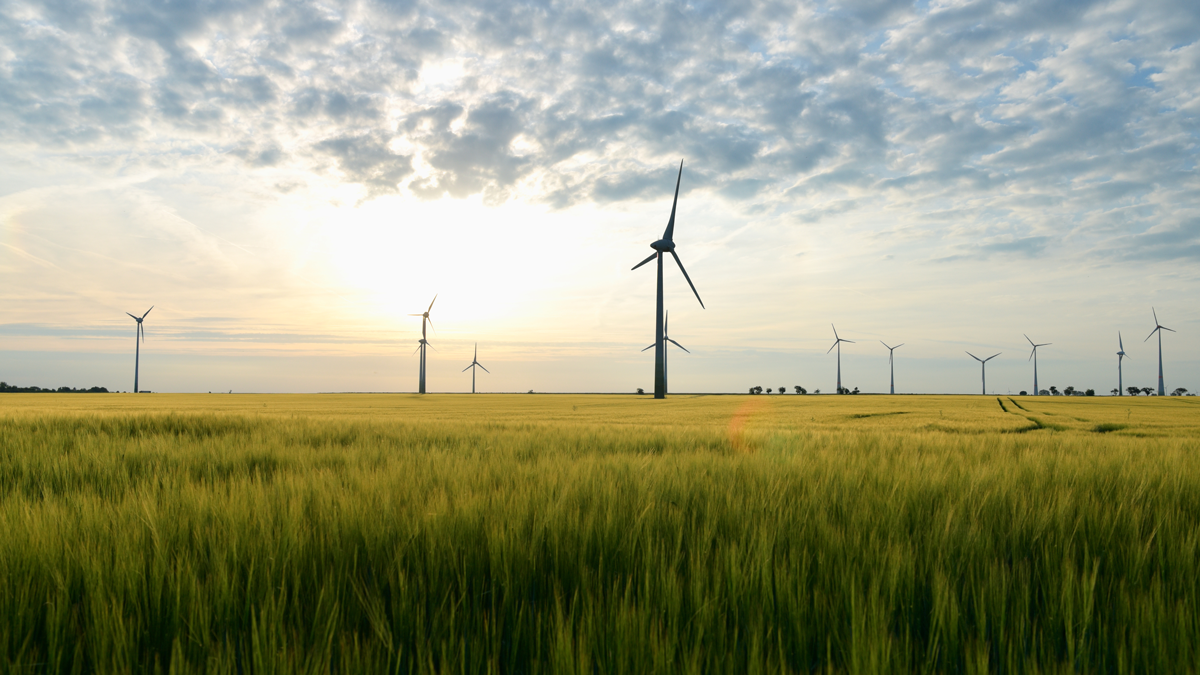
Techrete manufactures concrete using 100% renewable energy sources and generates approximately 25% of its electricity on-site. Its two plants — one in Balbriggan, County Dublin and one in Lincolnshire in the UK — have solar arrays on their roofs, while the Balbriggan location also has a 45kw ground source heat pump, which provides the site with thermal energy.
Need for increased government investment in renewables
Despite these capabilities, Russell says it’s more efficient for the company to purchase renewable power from the grid. While the solar arrays are effective, they carry a high carbon load per kilowatt hour due to the emissions produced during their manufacturing process. “So, we want the opportunity to take wind, hydro and large-scale solar-generated power from the grid,” he says. “That’s why Ireland and the UK need to accelerate their investment in renewable energy.”
Techrete manufactures concrete using
100% renewable energy sources.
Techrete also wants energy sourcing from the grid to be more traceable. “For example, what percentage of our grid energy comes from wind and what percentage comes from hydro?” asks Russell. “It’s information that can be difficult to obtain, but it’s important for accounting purposes and demonstrating our sustainability credentials to clients.” Plus, as the company makes concrete with 100% renewable energy, it would like the ability to keep its energy consumption figures separate when calculating the Global Warming Potential (GWP) of its products.
Efficiency drives sustainability strategy
Switching to renewables is just part of the firm’s sustainability strategy, which also involves reducing the volume of concrete it uses, using lower carbon materials, reducing waste and recycling. “We have a responsibility to use energy efficiently and reduce the consumption of energy in the manufacture of our products,” says Russell.