businessnews.ie


Ross Moore
Partner and Head of Energy, Infrastructure & Natural Resources, A&L Goodbody

David McElroy
Partner, Energy, Infrastructure & Natural Resources, A&L Goodbody

John Dallas
Partner, Energy, Infrastructure & Natural Resources, A&L Goodbody

Aisling O’Donoghue
Partner, Energy, Infrastructure & Natural Resources, A&L Goodbody

Brendan Curran
Partner, Environmental & Planning, A&L Goodbody

Kristen Read
Senior Associate, Environmental & Planning, A&L Goodbody
Ireland can turn its abundant renewable resources into secure, investable infrastructure if planning, grid flexibility and market frameworks move at the pace projects require.
Ireland has built a strong policy foundation for its energy transition. The task now is to convert targets, auctions and strategies into projects that generate power.
Offshore wind’s delivery test
The State is targeting at least 5 GW of offshore wind by 2030, while more than 3 GW was procured through the first offshore auction. Yet, no project has broken ground. Applications can run to thousands of pages, followed by lengthy requests for further information and uncertain decision dates.
For developers competing for mobile international capital, timing is not an administrative detail; it is a core investment risk. John Dallas, Partner, Energy, Infrastructure & Natural Resources at A&L Goodbody, says: “Statutory determination periods, backed by regulators with the people and expertise to meet them, would provide the certainty the market needs.”
The aim is not to lower standards, but to make a robust process more predictable. That would help offshore wind move from ambition to construction, supporting regional jobs, supply chains and long-term competitiveness while strengthening energy security.
Ireland does not lack energy ambition.
Its competitive advantage will depend on execution
Flexibility becomes infrastructure
As wind and solar supply more electricity, flexibility becomes essential. Variable generation must be balanced from hour to hour, while the system still needs the stability services traditionally supplied by conventional plants.
“Electricity storage and grid flexibility have already become essential to maintaining a stable and secure power system,” says Ross Moore, Partner and Head of Energy, Infrastructure & Natural Resources at A&L Goodbody. “Battery storage has moved rapidly from a niche grid service to a core infrastructure requirement,” he adds.
“One of the biggest challenges is how storage projects earn their revenues,” says Aisling O’Donoghue, Partner, Energy, Infrastructure & Natural Resources at A&L Goodbody. “Recent reforms, including fairer network charges and allowing batteries to trade directly in the wholesale market, are positive steps. What is still needed is a clear, government-backed procurement route for longer-duration storage that gives investors the certainty to commit at scale.”
Solar’s next phase
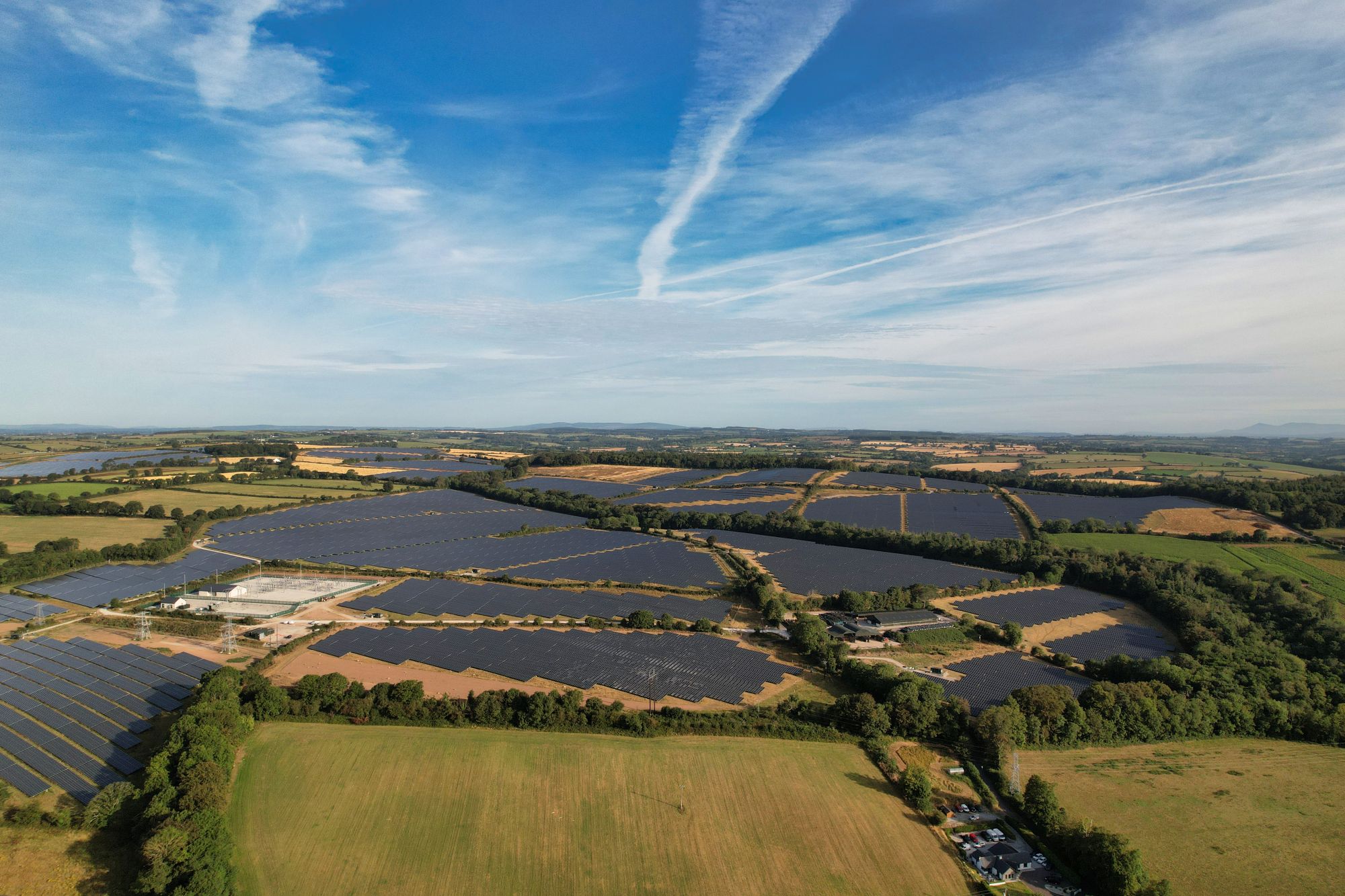
Solar shows how quickly a technology can advance when policy support and corporate demand align. Competitive support through the Renewable Electricity Support Scheme helped unlock utility-scale projects, while businesses’ appetite for renewable power created another source of demand.
With an 8 GW national target for 2030, the growth opportunity remains substantial. David McElroy, Partner, Energy, Infrastructure & Natural Resources at A&L Goodbody, identifies further potential in ground-mounted solar and commercial rooftops. “Maintaining momentum will depend on grid access and timely planning,” says McElroy. So, solar, storage and network investment must progress as an integrated system.
Earlier engagement, quicker decisions
Planning reform runs through every technology. Brendan Curran, Partner, Environmental & Planning at A&L Goodbody, says: “Early engagement between developers, regulators and communities can help. But every new planning policy involves cost, especially highly technical environmental requirements.” Developers, statutory consultees, prescribed bodies and communities need the capacity and clear timelines to engage before an application is lodged, when concerns can still reshape a project.
“Issues identified early are easier and cheaper to resolve, reducing delays and legal challenges,” adds Kristen Read, Senior Associate, Environmental & Planning at A&L Goodbody. “Reform should support timely engagement through better resourcing and clearer response timelines.”
Ireland does not lack energy ambition. Its competitive advantage will depend on execution: coordinated institutions, credible timelines and investable market frameworks. Getting those foundations right can turn renewable potential into secure power, economic activity and durable public confidence.