businessnews.ie
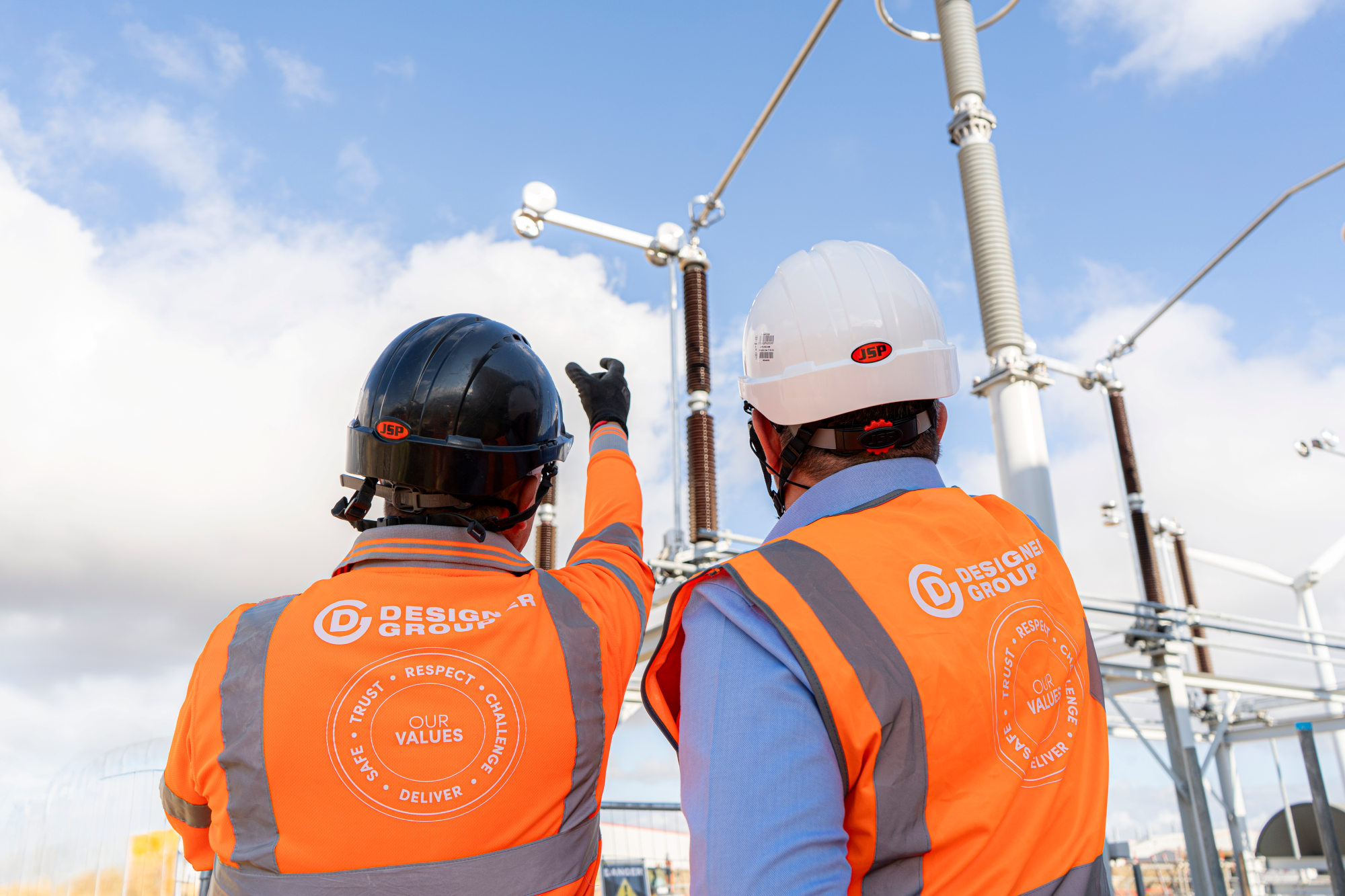

The current energy challenge for Ireland surrounds delivery and how it builds the generation, grid and supporting infrastructure required to meet industry and community needs.
To accommodate a rapidly changing energy system, Ireland must now continue to meet the needs of industry, communities and major energy users.
Electricity demand and increased investment
Over the past year, Designer Group has delivered 430MW of continuous on-site power for Large Energy User data centre operators in Dublin. To put that scale into context, if operated continuously, that represents enough electricity to match the annual electricity consumption of approximately 835,000 average Irish homes.
Rather than relying solely on grid supply, major users are increasingly investing in dedicated generation, storage, high-voltage infrastructure and sophisticated energy management systems. This is creating a more decentralised energy landscape, where resilience, flexibility and security of supply need to be considered alongside overall demand.
Decentralised energy landscape in practice
One of the clearest examples is Europe’s first large-scale microgrid-enabled energy centre, delivered in Dublin. Designer Group completed the full mechanical and electrical installation for the facility, integrating on-site generation with complex mechanical and electrical infrastructure to create a highly resilient energy environment.
It demonstrates how infrastructure can evolve to meet the needs of large energy users while reducing dependence on constrained grid capacity and creating greater flexibility in how power is generated and managed.
The same change can be seen at Echelon’s Dublin campus, where major digital infrastructure is being developed alongside significant dedicated generation and high-voltage infrastructure. Developments of this scale need to be understood not simply as data centres, but as complex energy ecosystems.
Energy ecosystem evolution extends across Europe
As the power requirements of major energy users increase, so too does the scale of the infrastructure required to support them. The Business is currently delivering 400kV high-voltage to medium-voltage substations for large-scale data centre developments in the Netherlands and Belgium, illustrating just how closely digital growth and energy infrastructure are becoming intertwined.
Yet, the changing energy landscape extends well beyond large energy users. As renewable generation increases, Europe also needs substantially more infrastructure to move power across regions, between countries and from new sources of generation into national transmission systems.
Generation, grid infrastructure and renewable projects
all ultimately have to become functioning assets
Interconnectors and converter stations
Designer Group has gained direct experience of this infrastructure through its involvement in the Celtic Interconnector, the new electricity connection between Ireland and France. The project represents a development for Ireland’s energy system, strengthening its connection with the wider European electricity market and increasing the ability to move power between both countries as renewable generation grows.
That experience is now being carried into another major energy infrastructure project in the UK. The Business has secured the electrical works package for the onshore converter station associated with RWE’s Norfolk Vanguard West offshore wind development. These projects demonstrate how power must also be converted, transmitted and successfully integrated into national and international networks.
Interconnected developments that will determine success
The engineering capability required to support major energy users is also increasingly relevant to the infrastructure needed to connect renewable generation, strengthen national networks and move power across borders.
It is this convergence between generation, high-voltage infrastructure, major energy users and grid connectivity that is beginning to define the next phase of the European energy market. Together, these developments point towards an energy system that is becoming more interconnected, decentralised and technically complex.
Practical execution of energy transition
For global engineering and construction company Designer Group, the opportunity lies in applying experience gained across generation, grid infrastructure, high-voltage systems and mission-critical environments to the next generation of energy projects. Gary Byrne, Executive Director Energy, believes the next phase will be defined by execution.
He concludes: “The conversation around energy has rightly focused on ambition and investment, but the challenge now is delivery. Generation, grid infrastructure and renewable projects all ultimately have to become functioning assets. That requires experienced teams, strong engineering capability and collaboration across developers, utilities, contractors and major energy users.”