 businessnews.ie
Future of Manufacturing Q4 2023
-

s Sponsored
Cyber resilience at the core: operational technology in smart manufacturing
In the manufacturing sector, one significant challenge is the prevalence of older servers and hardware, which can become substantial cybersecurity vulnerabilities. We ensure full protection of your manufacturing environment by focusing on often-overlooked areas in cyber resiliency. This commitment to security becomes even more crucial in light of recent research from industry leaders, which highlights...
-

s Sponsored
How close university-industry collaborations are helping to bridge manufacturing skills gap
As the war for manufacturing talent intensifies, one Irish university is working with industry partners to close the skills gaps with various enterprise-focused educational pathways. Low unemployment and skill shortages fuel talent competition in Irish manufacturing. University of Limerick leverages industry relationships for collaborative initiatives to bridge the skills gap. This encompasses Ireland’s largest and...
-

s Sponsored
How manufacturers can set new standards in efficiency and sustainability
A food and drink multinational has been optimising its operations through a programme of digital transformation while implementing eye-catching sustainability initiatives. To get ahead in today’s competitive manufacturing landscape, companies must be prepared to set new standards for flexibility, efficiency and sustainability. That’s what multinational PepsiCo has done, says Brian Colgan, Site Lead at the...
-

s Sponsored
New Innovation Hub at Technological University Shannon (TUS) driving Manufacturing Transformation through Digitalisation
In the heartland of innovation, where academia and industry converge, TUS stands as a beacon for collaborative progress. Within its realm, a new groundbreaking initiative, the Smarter Factory Technology Gateway, is carving a path toward disruptive change in Manufacturing. Supporting innovative and ambitious enterprises through their digital and green transformation, TUS is developing a centre...
-

s Sponsored
Uses for digital tools in more efficient advanced manufacturing
Partnerships between academia and industry are helping manufacturers across Ireland become more efficient with the use of new digital tools. Analysing manufacturing process data offers significant opportunities to boost yields and optimise material and energy efficiencies. Academia and industry are seeing the development of new digital tools and processes offering solutions to manufacturing challenges. Advanced...
-

Additive Manufacturing: enabling design freedom of Conformal Cooling
The digital design freedom inherent in Additive Manufacturing, when applied to the production of tool steel moulds, opens up new boundaries of controlled cooling. Additive Manufacturing (AM), or 3D Printing, unlocks the potential to create highly complex three-dimensional designs which are not easily possible with conventional manufacturing processes. This opens up new possibilities in design...
-

How useful is generative AI in manufacturing and supply chains?
The rapidly increasing ability of generative AI tools is creating huge interest in their potential in the data-rich environments of manufacturing and supply chains. While there is a lot of aspiration for generative AI use in shopfloor and operational applications, the technology is likely going to have the earliest impact in providing productivity in customer...
-

Digital and AI skills identified as key for next healthtech evolution
Ireland has the potential to establish itself as a global hub for the next AI-powered evolution in healthtech, but that potential may go unrealised if we fail to develop the skills required to compete. Artificial intelligence (AI) has emerged as a transformative force across industries, and the life sciences sector is no exception. Ireland’s world-class...
-
s Sponsored
Why data-driven manufacturers need tech, people and a strategy for success
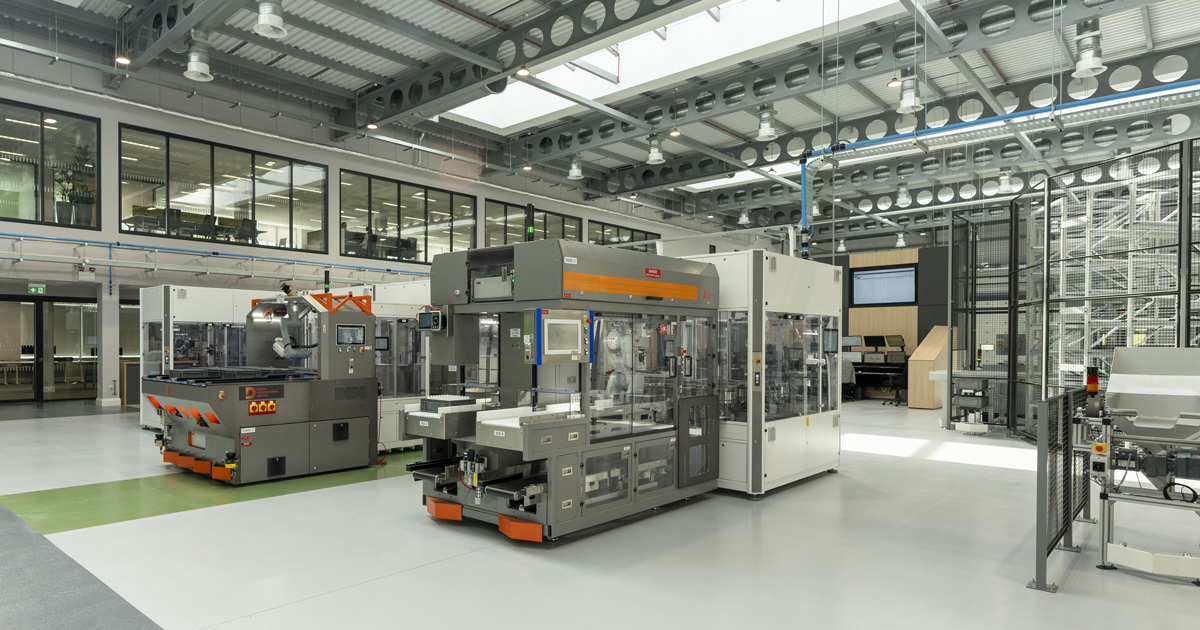
Successful data-driven manufacturers won’t just need to employ cutting-edge technology. They will also require human-centric skills and workforces that are adaptive to change. What will the factories of the future look like? Increasingly, they will become both data-driven and human-centric. From an outside perspective, that might sound like a contradiction of terms, agrees Domhnall Carroll,...
-

s Sponsored
What a digital twin can tell you about your warehouse capital plans
Future capacity plans need to be underpinned by a clear picture of current sourcing and inventory practices and a picture of how existing warehouse, receiving, marshalling and shipping areas are used. Leveraging supply chain volume and dimensional data can present a clear picture of actual inventory practices and how existing warehouse and material flow capacity...