 businessnews.ie


In this issue
-

s Sponsored
Educational institutions are becoming more agile by design
The nature of education is changing. To keep up with the ever-evolving expectations of learners, academic institutions must become more agile, innovative and collaborative. In a world of fast-paced technological innovation, nothing stands still. The education sector is no exception. Lifelong, personalised digital learning “Technology has changed the way we work, shop, bank and communicate,”...
-

s Sponsored
How to create responsible citizens — by empowering the teachers of tomorrow
A network of educators focused on embedding global citizenship and sustainability within post-primary teacher education. In a world marked by war, inequality, a climate crisis, forced migration and rising far-right ideologies, democracy and human dignity are under threat. For post-primary teachers in Ireland, it’s no longer enough to be technically competent in their specialised fields....
-

Apprenticeships: powering Ireland’s skills future through collaboration
In today’s fast-evolving world of work, building an inclusive, accessible and agile lifelong learning system is not a luxury — it’s a necessity. The system must be built on collaboration: between the Government, academia and industry. Apprenticeships sit at the very heart of this partnership. Expanding aviation apprenticeships Apprenticeships offer real-world training, internationally recognised qualifications...
-

s Sponsored
Why learning EU languages matters for Ireland’s place in Europe
Irish citizens have shaped the EU for over 50 years. More Irish candidates with strong language skills are needed to maintain and strengthen our influence in the EU. The work of the EU is wide-ranging, so it recruits people with a variety of interests, skill sets and backgrounds. Amplifying Irish voices in Europe Irish representation...
-

Why digital literacy skills are essential for students
As Ireland undertakes the first major review of the Leaving Certificate in over one hundred years, a renewed focus on digital literacy has emerged as a vital component of modern education. Digital literacy, which refers to the ability to confidently and critically use digital technology for communication, collaboration and problem-solving, is now recognised as an...
-

Digital inclusion and lifelong learning for the workforce of tomorrow
In the ever-evolving job market, technological advancements, shifting industries and global economic challenges are reshaping how we work. The workforce of the future will require more than just traditional skills. In order to thrive, individuals and businesses must focus on upskilling and reskilling, no longer buzzwords, but essential strategies for navigating the ever-changing world of...
-
s Sponsored
Why ‘enterprise engagement’ is about universities listening — not lecturing
Connections between enterprises and universities have the potential to yield benefits for all. Managed correctly, these partnerships for progress yield significant societal advantages. “When we engage with enterprise, everybody wins,” notes Professor Irene Sheridan, Head of Extended Campus at Munster Technological University (MTU). “We benefit by learning about the opportunities and challenges of enterprise, which...
-
s Sponsored
How standardised testing shapes future education
Ireland’s Literacy, Numeracy and Digital Literacy Strategy 2024–2033 emphasises the importance of assessment in education. The Educational Research Centre (ERC) has been a leading provider of standardised tests (known as the ‘Drumcondras’) for schools in Ireland for 40 years. The tests assess primary and post-primary students’ reading and mathematics skills, and work is underway to...
-

s Sponsored
An easier way to find learning opportunities across Europe
A free online platform aimed at learners and career movers of all ages has streamlined the process of finding and then applying for jobs and study opportunities across Europe. Hunting for jobs or learning opportunities across Europe has the potential to be a time-consuming, disjointed, confusing and frustrating process. Simplifying cross-border learning Say you’re living...
-
s Sponsored
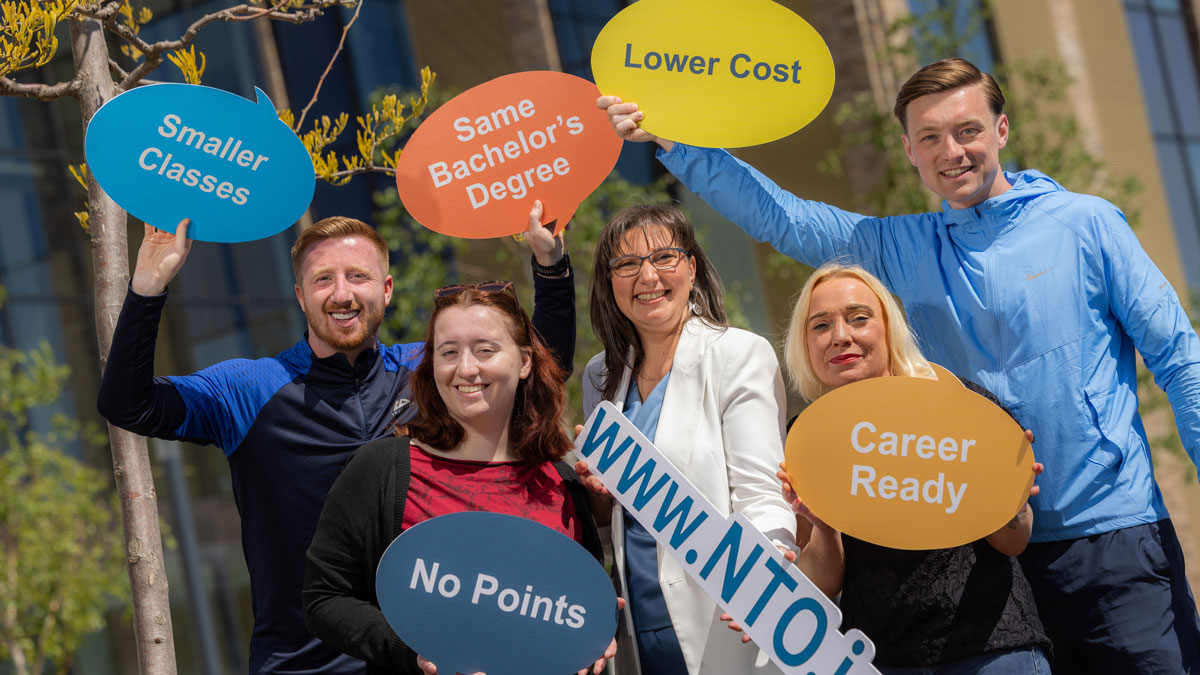
The same Bachelor’s Degree, but with an exciting new path
Tertiary Bachelor’s Degrees provide guaranteed progression from Further Education to Higher Education in a supported environment with no points needed and no college fees while studying in ETB. With the CAO deadline now closed and Leaving Certificate exams upon us, students across Ireland are exploring their options. One fast-growing alternative is the Tertiary Bachelor’s Degree...