
Darragh O’Brien
Minister for Climate, Energy and the Environment & Minister for Transport
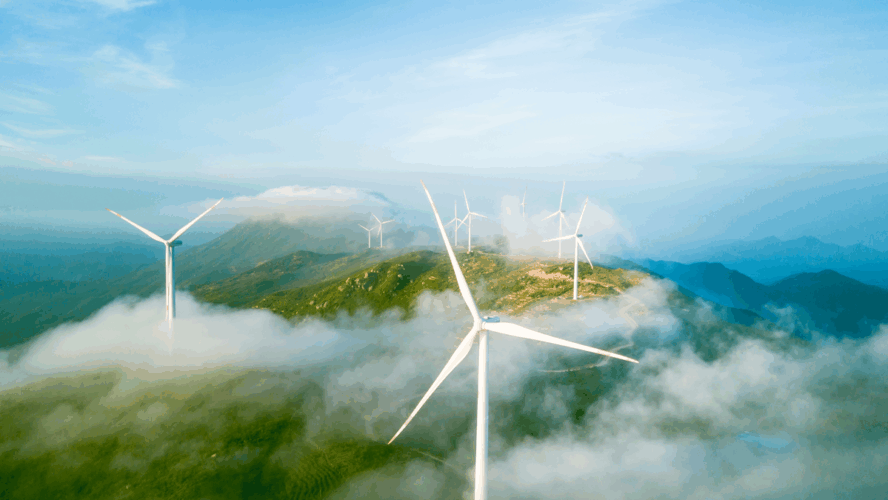
Ireland’s transition to clean energy continues to accelerate, with onshore renewable electricity generation, particularly wind and solar, currently being the cornerstone of this transformation.
Last year, 40% of Ireland’s electricity supply came from renewable energy. With Ireland’s advantage of abundant wind resources, along with well-thought-out policy design, we have successfully positioned ourselves as a world leader in onshore wind generation, with wind accounting for over 35% of electricity generation annually.
Community-backed clean energy
The Renewable Electricity Support Scheme (RESS) has played a pivotal role in accelerating project delivery and attracting investment in large-scale renewable developments. The Community Benefit Fund, introduced under RESS, has been particularly effective in building local support for projects by ensuring direct economic returns to the local communities that host these projects.
As auctions have progressed, investor confidence has grown due to ongoing commitments by the Government to an annual programme of auctions, improvements in auction design, planning, permitting and grid connections processes. This contributes to a steady pipeline of projects and continued deployment.
Thousands of Irish homes and
businesses are now generating
their own clean energy.
Wind and solar stabilise supply
Ireland’s onshore wind generation now exceeds 5 GW. These projects not only deliver clean energy; they also support rural economies by generating revenue through commercial rates and creating employment.
Solar photovoltaic (PV) is highly complementary to wind generation, providing a more stable and balanced energy supply across time. It is the fastest-growing renewable electricity source in the country.
Additionally, thousands of Irish homes and businesses are now generating their own clean energy, reducing energy bills and contributing to national climate targets. This contributes to relieving pressure on the national grid and allows households to export excess electricity generated to the network and receive payments from their suppliers for that power.
Grid investment powers Ireland’s transition
Ireland’s ambitions extend beyond the success of onshore development. The state is a key emerging market in the offshore renewable energy (ORE) space, with significant ORE ambitions.
Ireland’s government recently announced a transformative funding package for both the onshore and offshore grid, which will see €3.5 billion investment in Ireland’s electricity infrastructure. Ireland has five ‘phase one’ ORE projects in the planning system, with the expectation that these projects will be in construction by 2030.
As part of the state’s plan-led approach to ORE, the South Coast Designated Maritime Area Plan (SC DMAP) was approved by the Oireachtas in October 2024 and identified four sites where future offshore developments will take place.
Last May, the Government also announced a National Designated Maritime Area Plan to accelerate a national rollout of ORE. The goal is the delivery of 20 GW of offshore renewable energy by 2040. This national plan will enable forward planning for port and infrastructure development, and grid connection, as part of a long-term, holistic vision to benefit society and the environment.
