
Darragh O’Brien
TD, Minister for Transport, Minister for Climate, Energy and the Environment
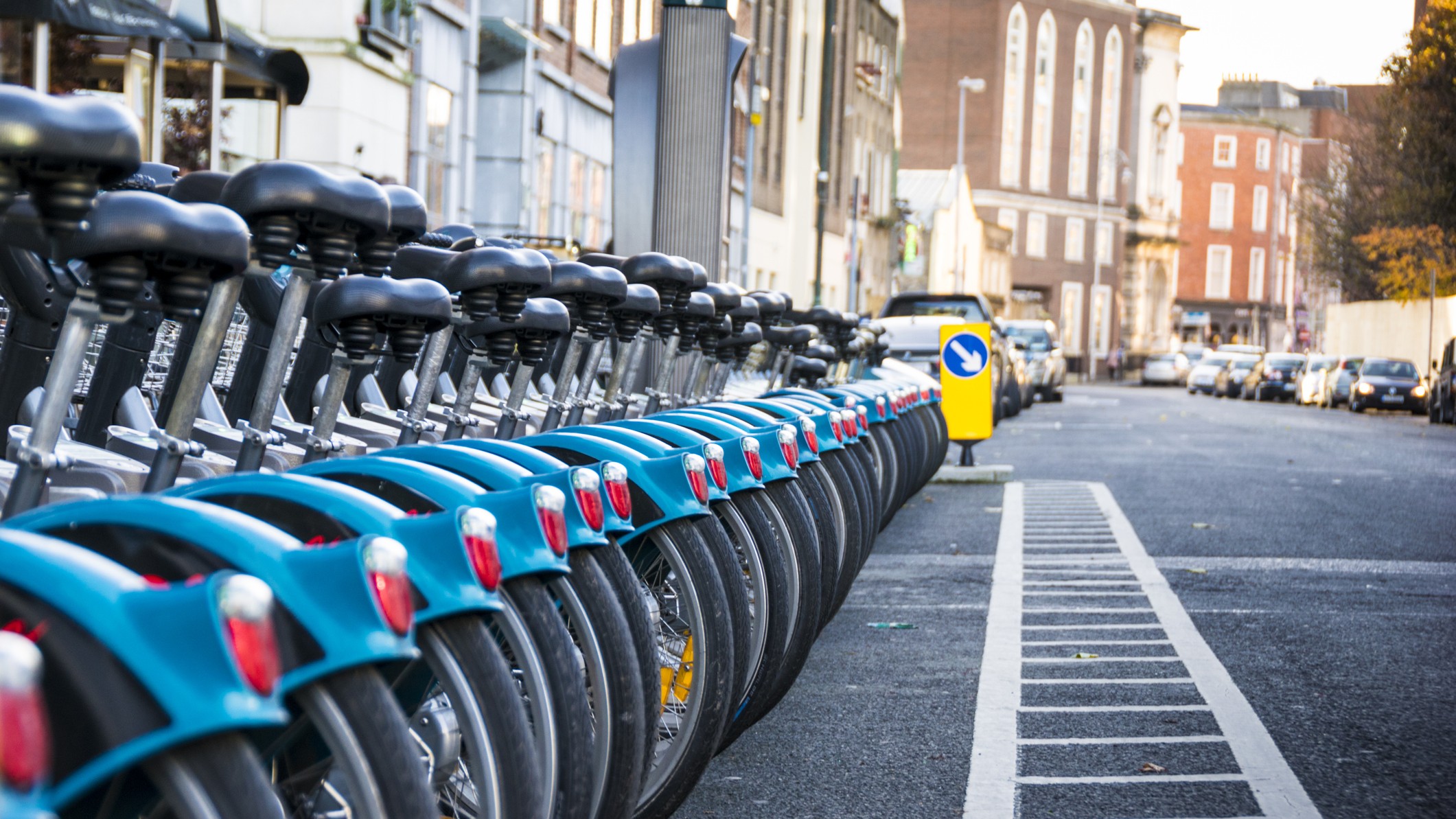
Shared mobility options like bikes, e-scooters and cars for hire are fast emerging as affordable alternatives to personal car use.
Ireland is transforming how it travels. Through the National Sustainable Mobility Policy, the range of travel options is continuously growing – supported by an enduring commitment to invest in public transport, cycling routes and walkable town centres.
From Dublin bikes onward
The concept of shared mobility isn’t new in Ireland; dublinbikes is 16 years old and an integral part of the city’s landscape. It paved the way for TFI Bikes in Cork, Galway, Limerick and Waterford. Thanks to collaborations between public authorities and private providers, the pay-as-you-go model is now commonplace.Shared cars have been widely available for many years, and shared bike schemes are no longer exclusive to city areas, with schemes in many Irish towns such as Sligo, Kilkenny and Athlone.
Building on this, the Programme for Government 2025 included a game-changing commitment to establish shared mobility hubs in every local authority area. This was re-stated in Ireland’s first policy document in this area: National Policy Statement on Shared Mobility and the Provision of Hubs, published in June 2025.
the pay-as-you-go model is now commonplace.
Real-world impact in Wexford’s Fleadh Cheoil
During this year’s Fleadh Cheoil in Wexford, shared mobility proved its value. With the core of the town pedestrianised to accommodate the festivities and parking restricted to the outskirts, the town’s e-scooters and e-bikes, operated by Bolt, facilitated over 4,000 trips covering a total of 9,300 km. The uptake during this period — with many users coming from all corners of the country and the world — demonstrates the growing appetite for shared mobility options in Ireland and beyond.
What’s next for shared mobility
A successor to TFI Bikes will roll out next summer, operating over a wider area with larger fleets and increased use of e-bikes. A Mobility Hubs Pilot Programme is also in development; this will establish a dense network of shared mobility hubs in five urban areas, ensuring easy access to shared bikes, e-scooters and EVs.
Meanwhile, the ROBUST project funded by SEAI is testing the operation of new shared mobility hubs in Galway, Letterkenny and Waterford, with another to be opened in Dundrum. By building on the foundations of the past and delivering on the ambitions of the present, the future of transport involves sharing.
