
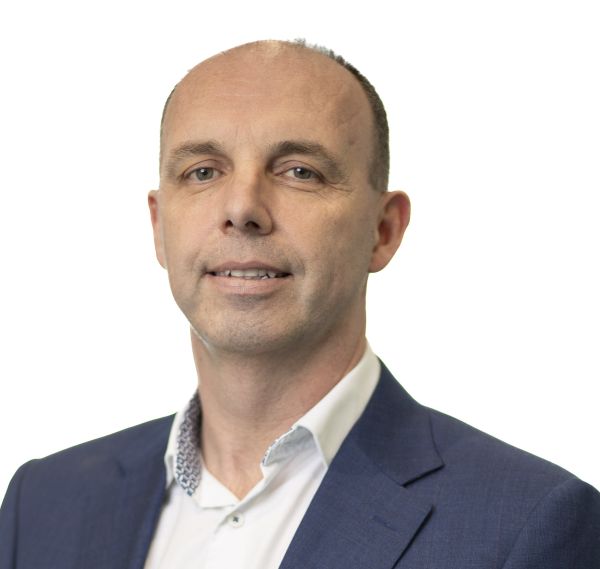
Brendan McGrath
Site Head, VP of Manufacturing, WuXi Biologics

Dr Eimear McCarron
Executive Director of Quality, WuXi Biologics
Leading biologics manufacturer’s Dundalk site is the first facility in Ireland capable of large-scale commercial biologics drug substance production for its global partners, operating under an integrated CRDMO model.
Ireland has made itself indispensable to global pharmaceutical manufacturing in recent years, and 2025 brings yet another defining moment. No longer just producing established products, Ireland’s first large-scale contract research, development and manufacturing organisation (CRDMO), WuXi Biologics, has been granted authorisation for commercial biologic manufacturing from the European Medicines Agency (EMA).
Ireland’s entry into global CRDMO commercial supply
“The past three years have been transformative,” explains Brendan McGrath, Ireland Site Head & VP of Manufacturing. “We’ve hit every major project milestone, completing construction, qualification, engineering and PPQ batches, and successfully achieving MIA / IMP approval from the HPRA. Achieving EMA approval has allowed us to release the first commercial biologics batches into Europe, a huge inflection point for the company.”
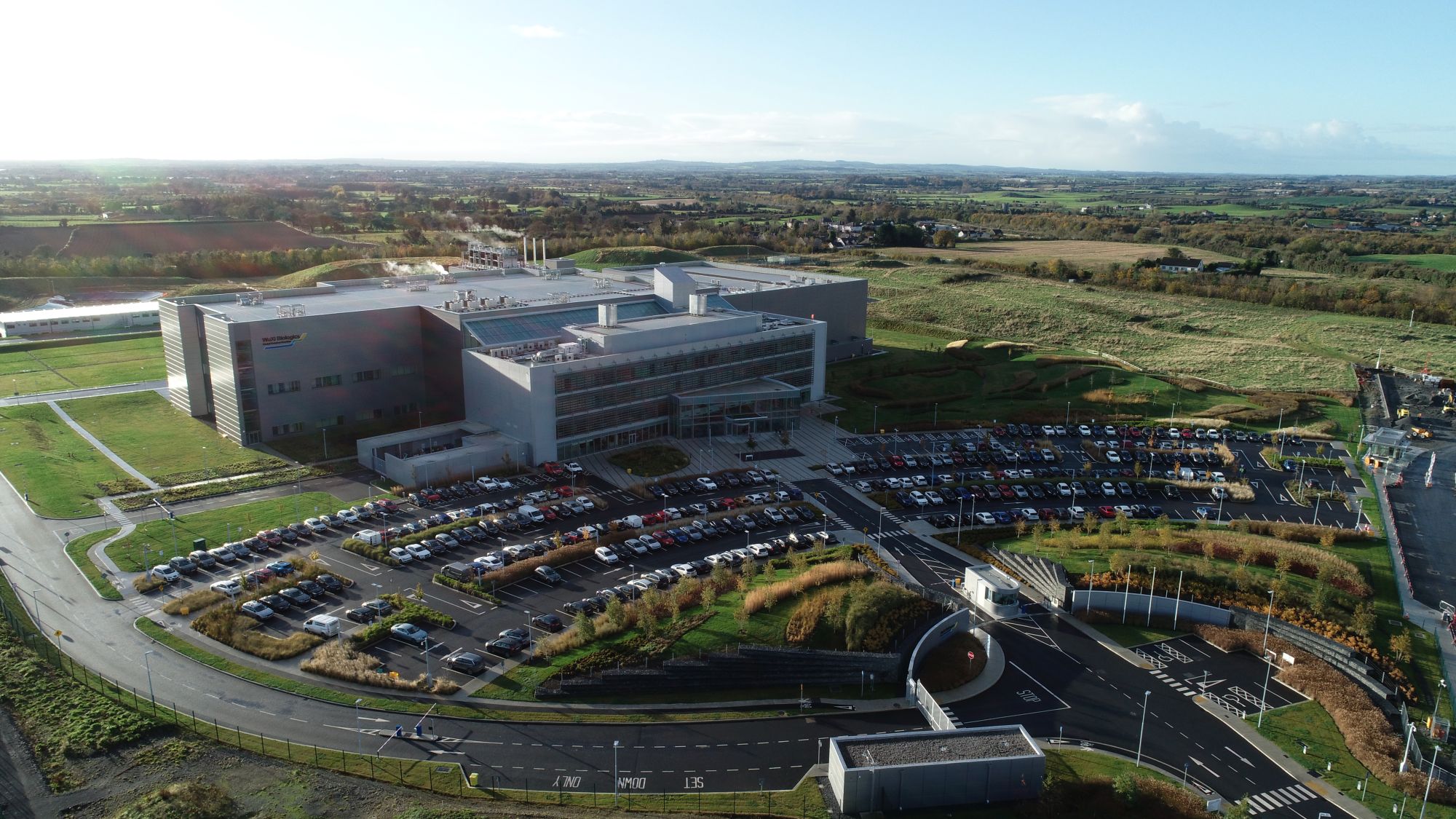
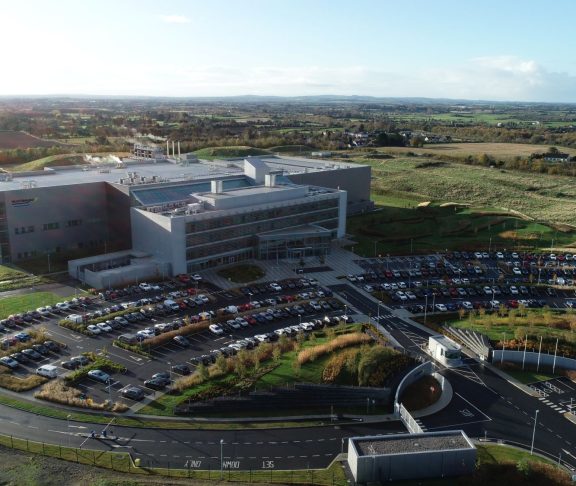
Their Dundalk facility is the first in Ireland with true large-scale commercial biologics capability under this integrated CRDMO model, offering development, manufacturing and regulatory support for global partners of all sizes in line with the company’s mission that every biologic can be made.
The company develops, makes, tests, helps gain approval of and manufactures biologics globally, including monoclonal, bispecific and multispecific antibodies, fusion-proteins, cytokines, enzymes and immunoglobulins.
“We’ve strengthened our CRDMO model, enhanced our quality systems, hired and trained an exceptional workforce and now operate as a full commercial manufacturing hub with the capacity to support clients in Europe, the US and beyond,” continues McGrath.
Different model from traditional biopharma
Ireland is traditionally built on stainless steel biopharmaceutical facilities, but Dundalk is different by design. Operating across two major manufacturing platforms, perfusion and fed-batch, the company utilises large-scale single-use technology to enable tech-transfer agility, digital visibility and rapid, reliable scale-up. For example, the WuXi Biologics MFG7 facility in Ireland houses twelve 4,000L SUBs, meaning it can realise flexible manufacturing at 4,000L, 8,000L, 12,000L and 16,000L, for different stages, scales and products.
“We are a fully single-use, closed-system operation, meaning every batch benefits from faster turnaround, reduced cleaning time and greater flexibility,” explains McGrath. “This allows us to manufacture more frequent batches and adapt quickly to client needs. It’s a competitive advantage for our customers, and a more sustainable approach for Ireland’s biopharmaceutical landscape.”
With such innovative manufacturing models, Ireland can now boast global CRDMO commercialisation capabilities, strengthening Europe’s unrelenting biopharmaceutical landscape, accelerating the discovery and delivery of breakthrough therapies, while also significantly reducing the environmental impact of pharmaceutical manufacture. By combining SUT with a scale-out strategy, the company has manufactured over 300 batches at scales ranging from 4,000 to 16,000 litres across our global facilities, achieving a 98% success rate since 2022.
Manufacturing excellence and digital execution
Delivering commercial biologics requires precision and excellence in technology transfer, validation, digital visibility and quality culture. Dr Eimear McCarron, Executive Director of Quality, speaks to the harmonised quality assurance systems in place across all sites, developed to enable consistent, compliant and patient-centric global manufacturing throughout all stages of commercial drug supply.
“We have one quality framework operating to the most stringent principles of compliance in an integrated and proactive way,” she explains. “Our initial focus was on establishing foundational compliance systems, but today, we operate with a proactive quality governance model that integrates digital tools for real-time visibility and predictive analytics.”
This evolution has strengthened data transparency, reduced human error and improved the cost of quality, leading to a 100% global inspection success record across their network. More importantly, it’ has embedded a culture of continuous improvement while ensuring that quality isn’t just a compliance requirement, but a driver of operational excellence, while ongoing investment into digital solutions continues to support access to personalised medicines.
“We’re continuing to build on these capabilities,” she explains. “Expanding into EU drug product release services and building capabilities for quality testing and importation. These value-added services allow us to offer a more integrated solution to clients, supporting them through every stage of the product lifecycle.”
From stand-alone quality testing to EU importation and release, the company operates as a true EU hub of excellence, layered on top of its commercial manufacturing capabilities.
“At a time when pharmaceutical companies are under pressure to minimise carbon impact and reduce
the miles their medicines travel, being able to supply Europe from Europe is a real advantage,”
European supply resilience and innovation
Ireland is becoming a strategic node between the US and EU markets, leveraging the supply chain resilience built during the COVID-19 pandemic. “At a time when pharmaceutical companies are under pressure to minimise carbon impact and reduce the miles their medicines travel, being able to supply Europe from Europe is a real advantage, ” explains McGrath. “It means faster pathways to market and the ability to respond rapidly when the world needs it most, as we demonstrated during COVID-19, providing capacity in the global health emergency.”
Such diverse regionalised manufacturing supports emerging biotechs locally, while also delivering on global pharmaceutical programmes, growing Ireland as an EU hub for importation. “With direct access to the European market and deep EMA-aligned quality expertise, we enable our customers to move with confidence, compliance and speed,” adds McCarron.
Driven by the vision that ‘Every drug can be made’, the layers of commercialisation capability and supply chain resilience continue to accelerate and transform the discovery, development and manufacture of biologics.
Sustainable, flexible drug substance manufacturing
The Dundalk site delivers large-scale commercial manufacturing powered by 100% renewable electricity, with 48,000 litres of fed-batch and 6,000 litres of perfusion capacity, demonstrating that high-performance biologics manufacturing can also be environmentally low-impact and intentionally designed to align with Ireland’s national sustainability goals.
“Our facility has been designed to minimise environmental impact at every level. From air handling units with heat recovery and rainwater harvesting, to sensor-controlled lighting and office design that maximises natural light, we’re reducing electricity and resource use wherever we can,” says McGrath. “We also support sustainable commuting with 24 electric car chargers, preferential car-sharing parking and have designed the facility in a way which encourages people to walk, cycle or run to work. Even small changes, like eliminating single-use cups and implementing ‘follow-me’ printing, contribute to lowering our footprint.”
Dundalk’s fully single-use platform significantly reduces energy and water consumption and changeover time, making it wholly consistent with Ireland’s green-industry vision.
Building the next generation of biomanufacturing talent
Despite ongoing recognition as a key player in biologics commercialisation, McGrath insists that their workforce is its greatest achievement, recognising a culture of determination to bring effective medicines to those who need them. “Our employees understand the tangible impact their work has on patients who depend on it, and being able to supply therapies globally is driving that sense of purpose, pride and responsibility throughout the company.”
“Successfully receiving EMA approval for a breakthrough therapy was a significant reward, and recognition has been felt throughout the whole workforce, strengthening the culture of pride and commitment to delivering life-changing medicines,” adds McCarron.
Partnering with the Dundalk Institute of Technology (DkIT) and the National Institute for Bioprocessing Research and Training (NIBRT), WuXi Biologics hopes to continue its development from a construction site to a thriving scientific and engineering community, training over 800+ employees of 22 different nationalities to become the next generation of Ireland’s biophamaceutical leaders.
“Our mission in Ireland has always been clear,” concludes McGrath, “to build capability that accelerates the delivery of biologics from idea to patients. And with commercial manufacturing now underway, Ireland plays a central role in the global biologics ecosystem.”
