


Professor Suzi Jarvis
Founding Director, UCD Innovation Academy, University College Dublin
Matt Mion
Education Officer 2025/26, UCD Students’ Union, University College Dublin
As a century of the Leaving Certificate exams draws to a close, there’s no better time to reflect on education today and what we wish for future generations.
In recent decades, knowledge has become a form of private property to be acquired and demonstrated under the intense pressure of increased competition. Our society has become obsessed with individual attainment as the primary route to future rewards.
From self-commodification to collective intelligence
Yet these rewards can be elusive in tumultuous times. Today’s problems require groups capable of thinking together, drawing on diverse perspectives and creating solutions that no single person could conjure up alone. What we now need from education has shifted, from self-commodification to collective intelligence.
Collective intelligence isn’t a modern invention. Many resilient cultures assume that knowledge is inherently shared: something held between people, generations and communities. The African philosophy of Ubuntu (“I am because we are”) frames learning as deeply relational, grounded in mutual responsibility. For thousands of years, such collective ways of knowing have enabled communities to adapt, survive and transmit wisdom across time.
So, what would our system look like if we regarded collective intelligence as the desired outcome?
The core premise broadens from ‘What can you achieve?’ to ‘What should we accomplish?’. Curriculum stops being a march through siloed disciplines and becomes a series of evolving problems worth solving.
Students engage with the wider community where they learn to test their ideas in context, negotiate competing needs and refine understanding through implementation. The school becomes a pollinator of ideas in a wider learning ecosystem.
Collaboration as the foundation of learning
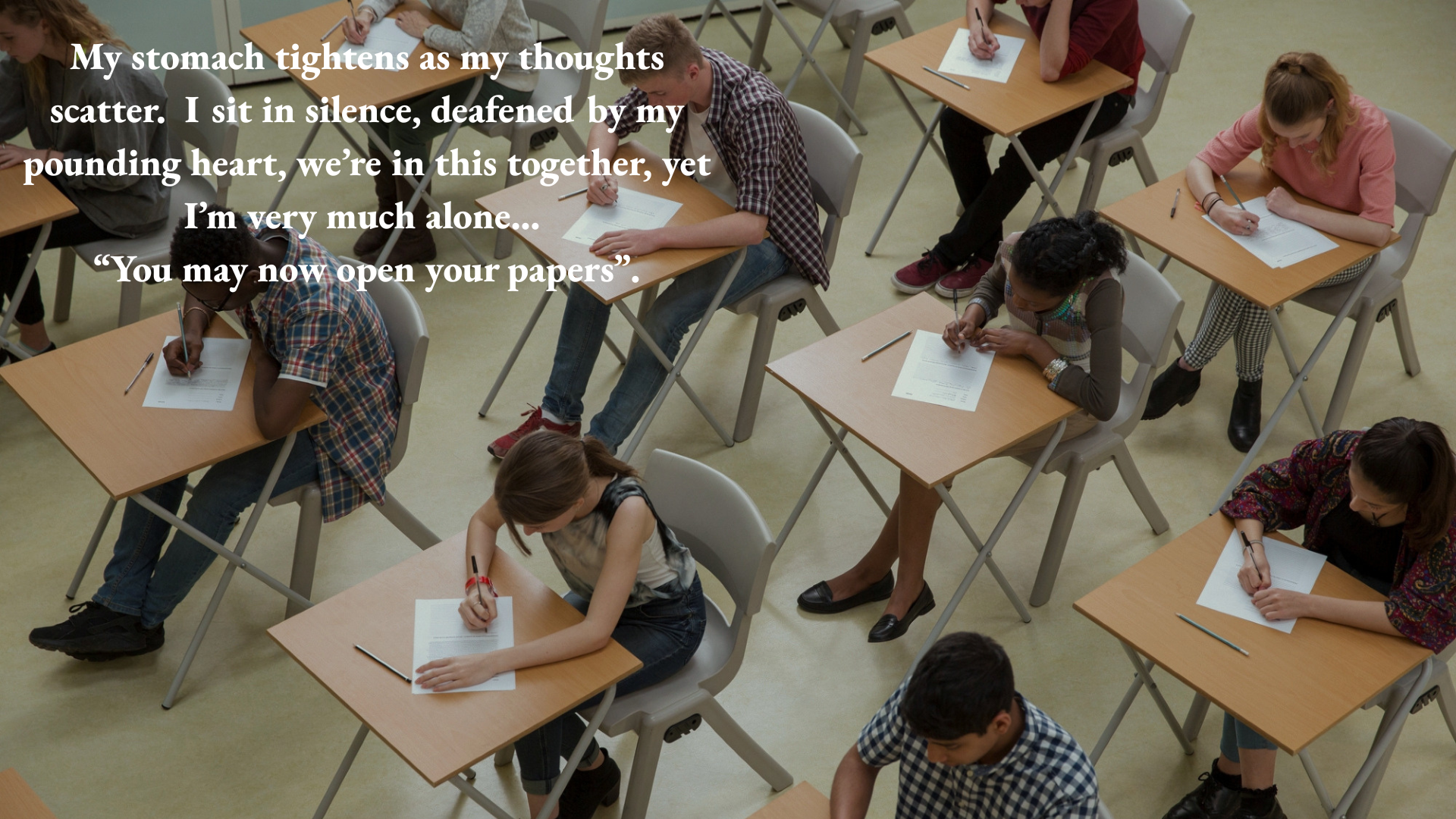
When it comes to assessment, ranking individuals makes little sense when the goal is building collective capability. Competition becomes ‘us versus a problem’ rather than ‘student versus student.’ Students think aloud because their ideas matter to the group. The psychological effect is exhilarating. Engagement increases because success benefits everyone.
Teachers become pivotal as designers of the social conditions in which collective thinking can flourish. They become creative catalysts, curating worthwhile problems, fostering novel alliances, guiding the synthesis of diverse perspectives and telling stories which inspire action.
human potential is fluid and profoundly shaped by context
This is already visible across Ireland, from the Dingle Hub to the UCD Innovation Academy, where students learn by co-creating solutions with each other and their community. These environments thrive on curiosity, creativity, generosity and trust. Yet the wider education system continues to treat collaboration as a soft skill or even cheating, rather than the foundation of learning.
Systemic change will only come when we reckon honestly with the original ambitions of the industrial model of education: to sort the many in service of the few and displace communities from the field to the factory line.
Reductive psychological theories, like IQ testing, perpetuated the idea that ability was innate instead of emergent. Now, we know that human potential is fluid and profoundly shaped by context. We flourish not as isolated competitors, but when we coalesce for the greater good – in Irish, the concept of Meitheal.
Big problems require big change
Why, then, is the current system maintained? In part because credentialing seeks to annotate difference. Also, because bureaucracies prioritise what’s measurable over what’s meaningful. Ultimately, because of the belief that the labour market and economic productivity still demand it. But is that right, or even good for society at large?
But the reality is unavoidable. If we want societies capable of responding to climate disruption, geopolitical instability, rising inequality and technological displacement, we need an education system centred on what communities can accomplish. The industrial logic of individual ranking has run its course.
The next revolution in education won’t come from more personalised learning, adaptive algorithms or continuous assessment. It will come from treating classrooms — and entire systems — as evolving communities of collective intelligence, connected not only to each other but to ancestors whose knowledge we inherit and future generations whose wellbeing depends on what we learn to do now – together.
