

Órla Burke
Sustainability Manager, Engineering & Major Projects, ESB

John Walsh
Emerging Technology and R&D Manager, ESB
Sustainability and emerging technology managers at Ireland’s leading electricity utility speak to the importance of designing for circularity and collaborative innovation.
From Burke’s perspective, circularity should be embedded in the early development and design stages, long before construction starts.
“Sustainability by design is about proactively integrating environmental, social and governance standards directly into the core of our business, recognising that the early stages of a project can offer the greatest and most scalable impact,” she explains. “Designing out waste, selecting lower-carbon materials, planning for sustainable construction methods and future decommissioning aren’t add-ons; they’re fundamental engineering decisions that shape an asset’s performance for decades.”
Reframing its thinking from cradle-to-grave to cradle-to cradle, ESB is considering disassembly, reuse and repurposing from the beginning, looking ahead to what happens at end-of-life before an asset is even built.
As Burke points out, “Decommissioning is no longer the end of the story. While acknowledging the challenges, we are increasingly recognising the opportunities that circularity can bring: assessing development and retirement of assets through a circular lens can lead to reuse, material recovery and broader societal benefit.”
Innovation and project development
Innovation in this space supports both incremental improvements to enhance existing business models and transformational innovation to develop new areas of business, explains John Walsh, Emerging Technology and R&D Manager. “We started by developing a clear understanding of what assets we have and smart systems to track them, so we know what’s becoming available and when, and where assets could be safely redeployed,” Walsh explains.
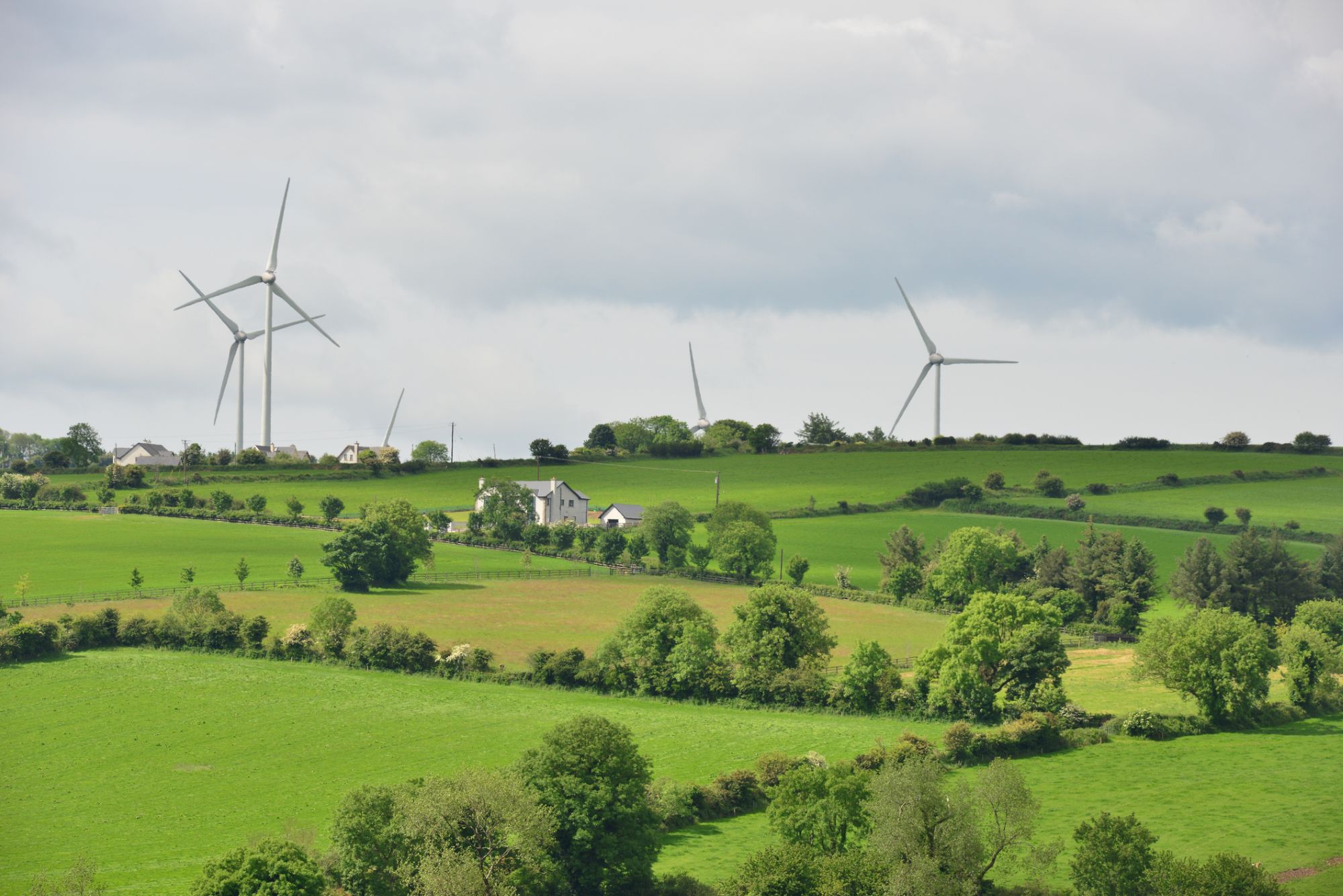
“In renewable infrastructure such as wind turbines and battery storage, we’re looking closely at material composition, recyclability and long-term impact,” adds Burke. “We’re engaging with manufacturers and R&D partners to understand what goes into these technologies, what can be recovered and how assets can be repowered or repurposed.”
Innovation also leverages technology, partnerships, and breakthrough solutions to transform energy generation, storage and use. “New technologies like vehicle-to-grid are enabling us to use EV batteries to support the grid during growing peak demand,” explains Walsh. “We’re exploring low-carbon materials such as green cement, manufactured using by-products from steel production. Biomethane is another exciting example, turning materials considered waste into renewable energy, and we can also repurpose wind turbine blades as structural elements for bridges, telecom towers and even street furniture for bike storage.”
Designing out waste, selecting lower-carbon materials, planning for sustainable construction methods and future decommissioning aren’t add-ons; they’re fundamental engineering decisions that shape an asset’s performance for decades.
Supply chain collaboration
Circularity cannot be achieved in isolation and requires active collaboration across the entire supply chain to facilitate the development of low-carbon materials, greener production or next-generation circular renewable technologies. “We’re seeing the energy system change,” explains Walsh. “Traditional barriers between industry, markets and consumers are breaking down, enabling new technologies, smarter grids and circular approaches to become more interconnected and flexible.”
“Through an open innovation ecosystem, we collaborate with universities, research organisations, energy start-ups and major industry players, as well as local authorities and community stakeholders to drive progress,” explains Walsh. “It’s this shared approach to innovation in industry that will enable us to unlock the potential of a circular economy.”
Recognising the value of data driven decision-making to achieve scalable and verifiable progress, ESB also conducts extensive research and development into new technologies, producing an annual emerging technology insights report to inform industry practice and development.
