

Luke O’Keeffe
Head of Digital Project Delivery
Digital project delivery within construction has changed drastically. Digital technology is no longer a ‘nice to have’ but a necessity.
1. How has digital project delivery evolved, and why is it now central to modern construction?
Technology is constantly evolving and changing how we work. Recent innovations like Building Information Modelling (BIM) and 3D models are being superseded by new technology such as AI, drones, 4D and real-time dashboarding.
2. How do you mitigate the gap between the virtual model and the physical build?
From the outset, we try to establish practical BIM requirements in our projects and identify aspects we feel could benefit from it. Not all projects need a fully federated asset-tagged model, a photorealistic 4D video or all elements modelled to LOD400. The important thing is to have a defined set of criteria to follow that adds value to the project.
3. Many firms talk about BIM, but few truly implement 4D modelling. How is Walls practically linking models to the programme?
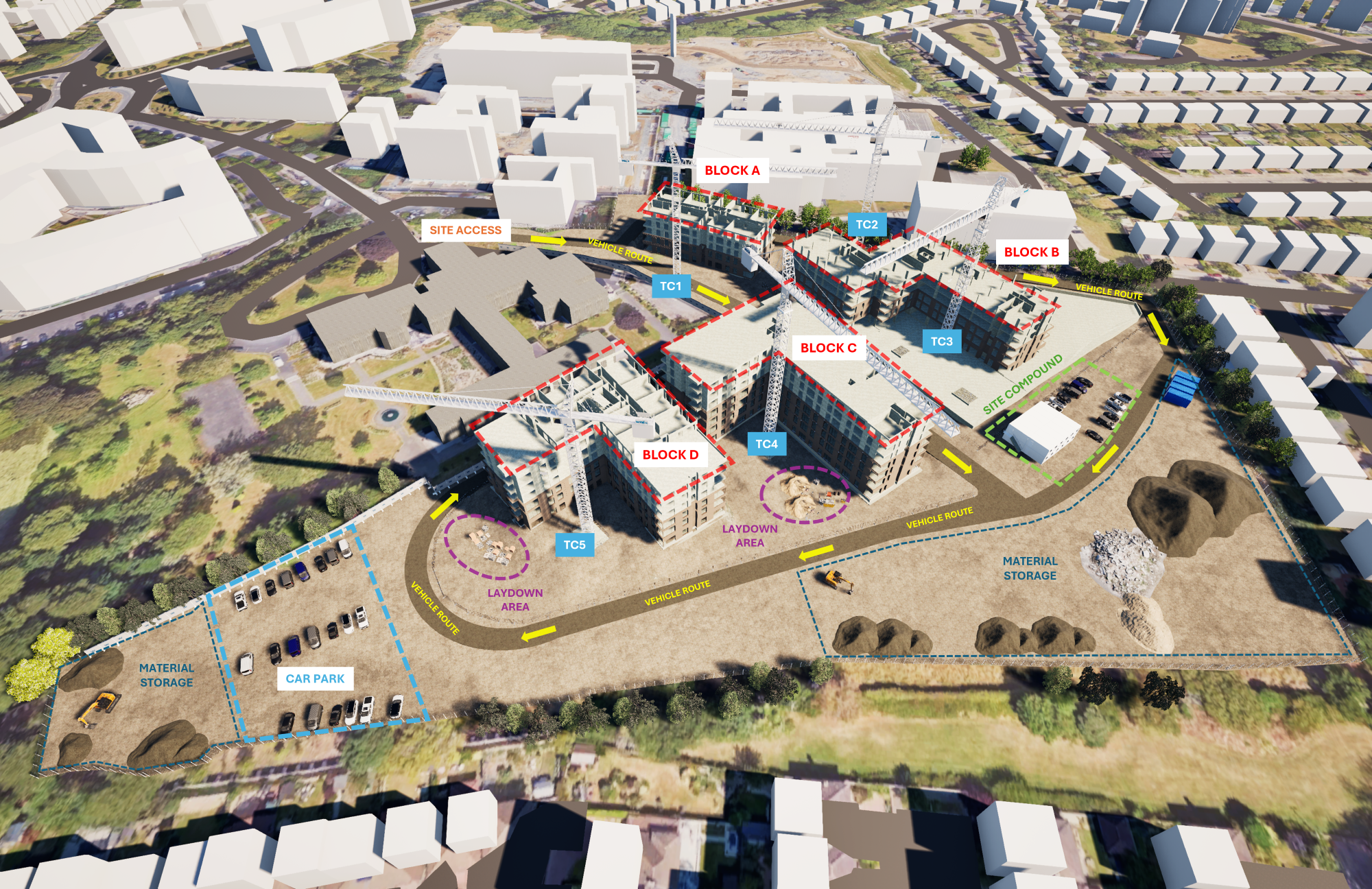
We’ve implemented 4D for certain aspects, depending on requirements, say for logistical set-up and to manage site orientation for new staff. Other more detailed 4D uses include project programme reviews using 4D video, where the site team can review the construction sequence to ensure everyone’s aligned.
4. How does your digital project delivery team use clash detection to reduce on-site risk of rework?
A standard part of our BIM implementation is federating and clash detection. Again, it comes down to strategy and set-up.
Do we have the right models included in the federated model, and are they at the correct LOD? Once established, we’d prepare our coordination programme to ensure the areas we’re working on and coordinating in are priority areas on the construction programme.
A successful implementation is structured under three key pillars: people, process and technology.
5. What tangible benefits does your digital approach deliver beyond construction?
In Walls, our construction approach has always been rooted in building strong relationships, flexibility and delivering value-driven solutions. We consistently meet commitments, exceed client expectations and foster enduring partnerships. Our digital transformation is proving invaluable, where we begin with the end in mind.
At the start of each project, we sit down with each client and their FM team to evaluate what they want, including any asset information they require to operate the building. After this initial kick-off meeting, we prepare our BIM documents to ensure that from the outset, everyone, including our supply chain, is aware of the project requirements, and what’s handed over on its completion is exactly what the client requires.
6. Delivering this level of digital transformation requires specialist expertise. How are you building its digital project delivery capability?
A successful implementation is structured under three key pillars: people, process and technology.
In 2020, our senior leadership team recognised the potential of digital construction, and an in-house BIM and Digital Project Delivery team was established to embed BIM alongside digital construction and innovation within our day-to-day operations.
Since then, new workflows and processes have been developed. In this evolving environment, we try to invest in the new technology as it’s being released.
To ensure the highest standards, we’re independently certified by NSAI to ISO19650, the international standard for information management using BIM. This demonstrates compliance and leadership in structured, data-driven delivery. To maintain it, we conduct regular internal audits and are subject to an annual audit from the NSAI.
7. What opportunities exist within your BIM and Digital Project Delivery team?
There are various opportunities within our Digital Project Delivery department, as it manages more than just the 3D models; it’s also involved in the rollout of new technology on our sites, to create a ‘data drives decisions’ ecosystem. We do this through BIM, 4D, Virtual and Augmented reality and digital dashboards. If you would like to join our team, check for vacancies here.
Our vision is clear: to be a leader in digital construction, delivering smarter, safer and more sustainable projects for our clients.
